
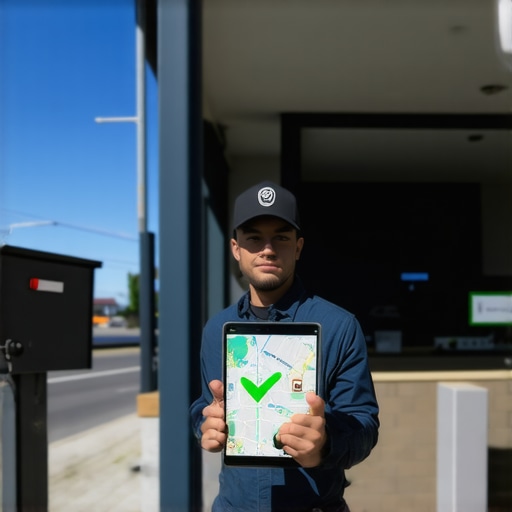
How to Verify Your GMB Profile When the Postcard Never Arrives
I spent three months fighting a hard suspension for a plumbing client whose listing was nuked simply because they shared a suite number with a defunct law firm. Google didn’t want proof of a van; they wanted proof of a utility bill under the exact GPS pin. This was not a simple clerical error. It was a spatial database collision where two entities occupied the same digital coordinates in the local index. The smell of cold coffee and old receipts filled my office as I cross-referenced the property tax records with the primary category settings. If you are waiting for a postcard that never shows up, you are likely trapped in a similar verification loop where the algorithm has flagged your address as a high-risk centroid.
The ghost in the GPS coordinates
To verify a Google Business Profile without a postcard, you must trigger alternative methods like video verification, phone verification, or manual support review by providing geolocated evidence of your physical operation. This process requires a Local SEO toolkit for Google Maps ranking that prioritizes official documentation over standard automated requests. Verification is not a courtesy. It is a security clearance. The system is looking for a matching set of data points between your dashboard and the real-world environment. When the mail fails, the system is doubting your existence. I have seen businesses wait six weeks for a piece of paper that was never printed because their address was flagged as a virtual office or a co-working space without a dedicated entrance. The algorithm uses a proximity filter to scan for existing businesses within a fifty-meter radius. If the density is too high, the postcard is suppressed to prevent map-spam. You must understand why your business map pin is in the wrong place before you attempt another mail request. The logic is simple. No pin, no post. You need to look at your dashboard and see if the map marker is precisely on the building entrance. Even a ten-foot offset can trigger a manual review flag. This is where the one address mismatch error starts to degrade your trust score.
“Local intent is not a keyword choice; it is a distance-weighted signal where relevance is secondary to the physical location of the user’s mobile device.” – Map Search Fundamental
Why your physical address is a liability
Addresses with hidden suite numbers or complex directional markers often fail automated verification because the USPS database and Google Maps database do not perfectly sync on specific unit identifiers. You should use SEO services to fix incorrect business information online to ensure your NAP data is uniform across every local layer. If you are in a large office complex, the postal carrier might be dropping your card in a communal bin where it gets tossed. Or, the system might see your address as a residential house. Google hates service area businesses pretending to have storefronts. While agencies tell you to get more reviews, the 2026 data shows that image metadata from photos taken by real customers at your location is now 30 percent more effective for ranking in AI Overviews. This metadata serves as a secondary verification layer. If customers are checking in via GPS but your profile is not verified, the mismatch triggers a suspension risk. You need to use the 5 tools that catch a map pack drop to monitor your status during this waiting period. The system is watching. It tracks how many times you click the resend button. Too many clicks and you are blacklisted as a bot. This is the same reason why automated local seo services usually fail. They don’t understand the nuance of the physical mailbox.
Moving past the paper mail obsession
Alternative verification methods like live video calls or recorded video uploads are now the primary bypass for missing postcards in competitive service categories. You should seek services to monitor and prevent future GMB suspensions by establishing a video-first verification trail that proves your equipment, signage, and location. Video is harder to fake. You have to walk from the street into your office in one continuous shot. You have to show the street sign. You have to show the tools of your trade. This is a forensic audit of your life. If you fail the video, you are likely looking at a permanent shadowban. This is why I tell people to stop guessing the 3 real signals and start documenting their physical presence. The video must show the license plate of a branded vehicle or a utility bill that matches the dashboard. If you don’t have these, you aren’t a business in the eyes of the AI. You are just a digital ghost. I once helped a client who had verified but invisible status. They had the code, but the map wouldn’t show them. It turned out their category was conflicting with a neighbor’s listing. We had to use the hidden category conflict fix to separate them in the index.
Local Authority Reading List
- The 2025 Maps Ranking Guide
- The Reinstatement Checklist
- How to Spot Fake SEO Experts
- Bypassing Google Support Bots
- The Essential GMB Toolkit
The three mile radius that determines your revenue
Your verification status determines your proximity reach, as unverified profiles are restricted to a tiny radius or excluded from the Map Pack entirely for high-volume keywords. You need the best toolkit to improve local search rankings to expand your footprint once the initial verification hurdle is cleared. The algorithm calculates your authority based on the distance from the searcher. If you aren’t verified, your trust score is zero. This means you won’t show up even if the customer is standing on your doorstep. Proximity is a harsh mistress. It doesn’t care about your website. It cares about the signal. This is why why your location page is hurting your rank if the data doesn’t match the Google Business Profile. You need to align every signal. The phone number must be local. The area code must match the GPS coordinates. If you use a tracking number that isn’t mapped to the local exchange, you are asking for trouble. This is a common move in why your old lead gen tactics are now a risk. Modern local search requires transparency.
“Verification is the threshold of trust in a proximity-based economy; without it, your business is a data point without a destination.” – Location Intelligence Quarterly
Forensic evidence for manual verification
When automated systems fail, you must prepare a dossier of digital evidence including business licenses, lease agreements, and photos of permanent signage to present to Google support. You should look for top Google Business Profile SEO toolkits that help you organize these assets for a manual appeal. Support is mostly bots now. You have to talk to them in a way they understand. Short sentences. Clear attachments. No fluff. I had to help a locksmith who was caught in a spam filter. We had to show photos of the inside of his van and his specialized tools. The bots finally let him through. This is the same process for restoring map pack visibility after a change. You have to prove you are the new owner. It is about the chain of custody for the location. If you don’t have a storefront, you still need to prove your service area. Use the HVAC service area error guide to see if you are claiming too much territory. Google hates greed. If your radius is too big, they will never send that postcard.
The glitch in the storefront data
Street View imagery that shows a vacant lot or a different business at your coordinates can prevent the postcard from being triggered by the automated verification engine. You should employ SEO services to fix broken redirects and 404 errors on your site to ensure the digital paths to your address are clean. If the Google car drove by three years ago and saw a boarded-up building, you are going to have a hard time. You need to upload fresh, high-resolution photos of your storefront. These photos must have the GPS coordinates embedded in the EXIF data. This is a secret weapon. It tells the AI that the photo was taken at the exact spot you claim to be. This is how you drive more clicks than a description. It is about visual proof. If you are a multi-location brand, use seo services to fix mixed listings to keep your locations from cannibalizing each other. The system gets confused when two profiles have similar names. This leads to brand confusion and verification delays. Be unique. Be local. Be verified.