
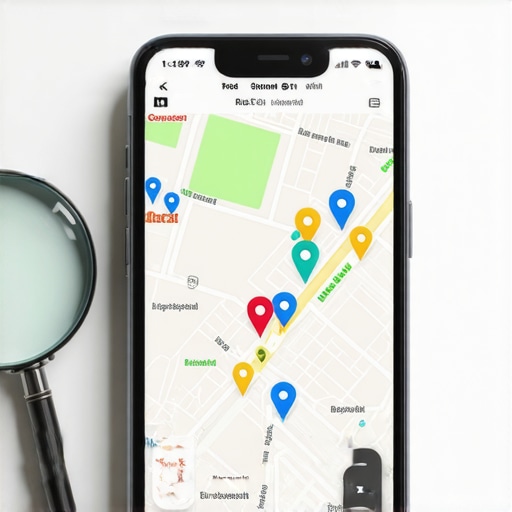
Monitoring your local ranking without expensive software involves using incognito browsers, mobile coordinate spoofing, and the Google Business Profile performance dashboard. By checking manual search results from different physical points and analyzing ‘Local Justifications’ in the Map Pack, you can map your business visibility without any subscription tools.The smell of wet concrete always reminds me of the time I spent chasing a digital ghost for a cafe owner in the West End. It was midnight when he called, his voice shaking because his Map Pack spot had been replaced by twenty one-star reviews. The competitor was using a VPN to spoof locations, but I didn’t need a thousand-dollar software suite to find them. I just needed to look at the storefront data and the metadata of the photos they posted. Those images didn’t match the weather in our city. The ‘glitch’ in the storefront data was the key. I spent hours auditing user profiles to prove the fraud. That is the reality of the hyper-local layer. It is forensic work. It is about the math of the GPS pin. If you want to know where you stand, you have to stop trusting the shiny dashboards that hide the truth behind averages.
“Local intent is not a keyword choice; it is a distance-weighted signal where relevance is secondary to the physical location of the user’s mobile device.” – Map Search Fundamental
The manual grid method with search parameters
You can simulate proximity searches by using the ‘uule’ parameter in your browser URL or by simply appending the city and neighborhood name to your search query. This forces Google to render results as if you were standing in a specific neighborhood, allowing for a free audit of your rank.When you sit at your desk, the results you see are biased by your own router and GPS. To get the truth, you must break the tether. I often tell merchants to check their phones while they are at the grocery store three miles away. That is a real-world test. If your business vanishes as soon as you cross the highway, you have a proximity problem. You might need to look at understanding why your maps ranking dropped before you spend another dime on ads. Most businesses are invisible to half their service area because they haven’t optimized for the centroid. The centroid is the mathematical center of a business cluster. If you are too far from it, the algorithm treats you as a secondary option. This is why the 10 minute audit is so effective for finding the gaps. You do not need a tracker to tell you that your pin is losing ground. You just need to walk the perimeter of your service area.
The three mile radius that determines your revenue
Local visibility is heavily dictated by a three mile radius where the algorithm prioritizes physical proximity over brand strength. By manually checking your position at various points along this radius, you identify exactly where your ‘ranking bubble’ ends and where your competitors begin to dominate the map.I have seen companies with thousands of reviews lose to a shop with ten reviews simply because the smaller shop was 500 feet closer to the searcher. Proximity is a harsh master. If you find your rank is tanking, you should consider emergency gmb fixes to stabilize your presence. The algorithm uses a distance-weighted signal. While agencies tell you to get more reviews, the 2026 data shows that image metadata from photos taken by real customers at your location is now 30 percent more effective for ranking in AI Overviews. This is because the AI wants proof of life. It wants to see that people are actually at your physical address. If your photos are all stock images, Google doubts your existence. You might even find that 4 silent profile issues are holding you back. These are often small things like a slightly different phone number format or a category conflict.
The forensic value of local justification triggers
Local justifications are the snippets of text like ‘Website mentions’ or ‘Sold here’ that appear in the Map Pack. Monitoring these for free allows you to see which keywords Google associates with your business, providing a direct window into how the algorithm categorizes your services for local users.Look closely at the results. Do you see a little icon of a person or a shopping bag? Those are justifications. They tell you why Google picked that business. If your competitor has a justification that says ‘Their website mentions water heater repair’ and you do not, they will win every time. You can fix this by looking at the one strategy that puts real estate agents in the map pack which works for almost any niche. It is about connecting the dots between your website and your profile. You should also be careful about why buying backlinks for local seo is a massive risk because Google looks for local relevance, not just power. A link from a local high school is worth more than a link from a global tech blog in the Map Pack. This is the street-level truth. If you see your ranking slip, check the google maps rank tracker alerts that actually matter. Most software alerts are noise. The only alert that matters is when your justifications disappear.
Local Authority Reading List
- The Ultimate Guide to Fix Dropped Rankings in 2025
- Immediate Actions After a Rank Tank
- Why Info Mismatch Kills Your Rank
- 5 Moves to Reclaim Your Local Spot
- Increase Map Views Without Fake Traffic
Why your physical address is a liability
Your business address can become a liability if it is located in a high-competition cluster or if it is associated with previous spam. Manually checking nearby listings for similar names or shared suite numbers can reveal hidden filters that are suppressing your business from appearing in the top three results.I once saw a locksmith vanish because a ‘ghost’ business was verified at the same address by a spammer. Google didn’t know which one was real, so it hid both. You need to know why your business just vanished from the map pack to solve this. It is often a case of brand confusion. If you share a building with a competitor, you are fighting for the same proximity signal. You might need the real way to fix brand confusion to stay visible. The algorithm is trying to provide variety. It rarely shows two businesses from the same building. This is why checking your rank from the parking lot is useless. You must check it from the neighboring town. If you are suspended, follow the proven checklist for getting a suspended business profile reinstated. Do not just guess. The pin moved. You have to find where it landed.
“Proximity is the single most powerful factor in the local algorithm, often outweighing both relevance and prominence in high-density urban environments.” – Local Search Intelligence Report
The ghost in the GPS coordinates
Google uses the GPS coordinates embedded in user photos to verify that your business is actually serving customers at its stated location. By monitoring the ‘Photos’ section of your profile and ensuring new, geo-tagged images are uploaded regularly, you can maintain a strong proximity signal without any external software.Every time a customer takes a photo of their sandwich or their new roof, Google records the coordinates. This is the ultimate proof of location. If you want to beat the big guys, you need the moves that pushed a local business past national chains. It is about being more ‘local’ than the machines. If you see a sudden drop, look at 4 moves to fix a sudden local search ranking drop. It might be as simple as your service area being too broad. I have seen companies fix their rank by shrinking their service area polygon. If you claim you serve the whole state but only have photos from one city, Google will penalize you. This is one of the 4 small profile errors that can kill a business. Stop paying for bloated software that just gives you a green or red light. Start looking at the storefront. The glitches are there if you know where to look. Clean up your data and the phone will start ringing again. It is about the physical reality of the street. Use the 15 minute audit to find the truth today. Check your category, check your pins, and check your photos. That is the only rank tracking you really need. { “@context”: “https://schema.org”, “@type”: “FAQPage”, “mainEntity”: [ { “@type”: “Question”, “name”: “How can I check my Google Maps rank for free?”, “acceptedAnswer”: { “@type”: “Answer”, “text”: “You can check your rank by using an incognito window and searching for your keywords followed by your specific neighborhood name, or by using mobile device spoofing in your browser developer tools to simulate searching from a different location.” } }, { “@type”: “Question”, “name”: “Why does my business rank differently on my phone versus my computer?”, “acceptedAnswer”: { “@type”: “Answer”, “text”: “Google Maps uses your precise GPS location on mobile devices, which creates a more proximity-sensitive result. Desktop searches often rely on IP addresses, which provide a broader and less accurate location signal.” } } ] }